
How Server Latency Shapes Bonus Activation Windows in Cross-Border Mobile Number Draw Apps
Server latency directly influences the timing and success of bonus activations in mobile number draw applications that operate across multiple countries. These apps rely on real-time server responses to validate user actions and trigger promotional offers within defined windows, and delays in data transmission can shift or eliminate those opportunities entirely. Observers note that cross-border environments amplify these effects because network paths often span continents, different regulatory zones, and varied infrastructure qualities.
Understanding Server Latency in Mobile Draw Platforms
Latency measures the round-trip time for data packets traveling between a user's device and the application's central servers. In number draw apps, this metric becomes critical during bonus activation sequences, which require precise synchronization between the client interface and backend systems. Research from network monitoring groups indicates that typical mobile latencies range from 30 milliseconds in well-connected urban areas to over 200 milliseconds when signals cross international boundaries or rely on congested routing nodes.
Application developers program bonus windows to open and close based on server-confirmed timestamps, so even brief delays can push a request outside the eligible period. Those who manage global platforms report that activation logic often includes tolerance buffers, yet these buffers shrink when operators face strict compliance rules in multiple jurisdictions.
Cross-Border Factors That Increase Latency
Geographic distance remains the most consistent contributor to higher latency in international mobile networks. Signals traveling from Southeast Asia to European data centers encounter multiple undersea cables and peering points, each adding measurable delay. Regulatory requirements in different regions further complicate routing because some countries mandate local data processing, forcing apps to switch between regional servers mid-session.
October 2026 brought expanded 5G coverage in several markets, which reduced average latency in domestic connections, yet cross-border traffic still experiences variability due to legacy 4G handoffs and inconsistent spectrum allocation. Data collected by international telecommunications bodies shows that peak evening hours in one time zone frequently overlap with maintenance windows in another, creating temporary spikes that exceed 150 milliseconds.
Impact on Bonus Activation Sequences
Bonus activation typically follows a sequence where the app sends a request containing user ID, timestamp, and game state to the server, which then validates eligibility and returns an authorization token. When latency exceeds the window threshold, the server may reject the request or apply it to the next cycle. Studies on mobile gaming infrastructure reveal that activation success rates drop by measurable percentages once round-trip times surpass 120 milliseconds in cross-border scenarios.
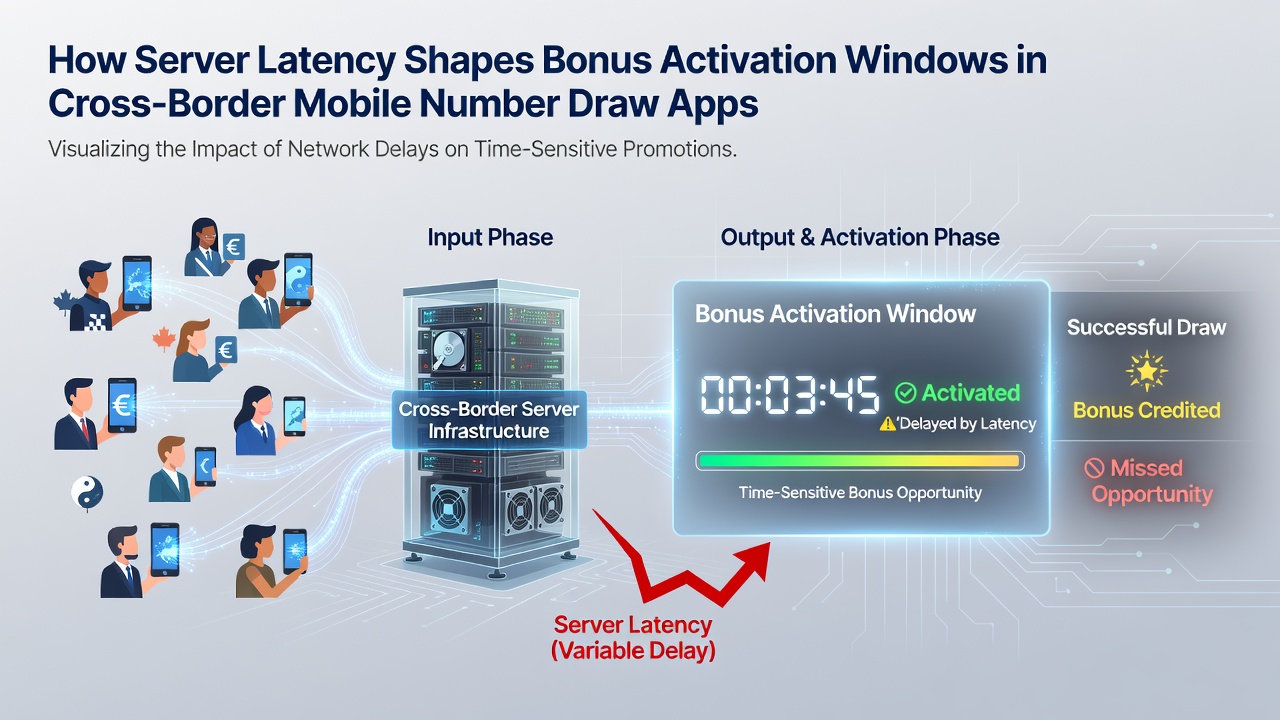
Payment gateway integrations add another layer because bonus funds often link to deposit confirmations that must clear through international financial networks. Delays in either the game server or the payment processor can desynchronize the two systems, leaving users with unclaimed offers. Platform operators address this through edge computing nodes placed in key regions, though deployment remains uneven across emerging markets.
Technical Adjustments Operators Use
Developers implement predictive algorithms that pre-load potential bonus states on the device while the server validates in the background. This approach reduces the visible impact of latency, yet it requires careful calibration to avoid conflicts with real-time draw results. Industry reports from organizations tracking global gaming technology note that hybrid models combining local caching with periodic server reconciliation have improved activation reliability in multi-region deployments.
Some platforms stagger bonus windows by geographic clusters rather than using a single global timer. This segmentation allows operators to account for known latency ranges between specific country pairs and adjust activation periods accordingly. Evidence from network performance audits shows these adjustments maintain consistent user access rates even when underlying infrastructure varies widely.
Regulatory and Infrastructure Considerations
Cross-border number draw applications must also navigate data residency laws that dictate where user information and transaction records can be processed. These rules sometimes force traffic through longer routes to approved jurisdictions, increasing latency beyond what pure network distance would suggest. According to GSMA network analysis, regions with strict localization requirements experience average additional delays of 40 to 80 milliseconds compared with unrestricted routing paths.
Collaboration between app providers and telecommunications carriers has produced dedicated peering arrangements that prioritize gaming traffic. These agreements help stabilize latency during high-demand periods, though availability depends on carrier partnerships in each operating country. Observers tracking October 2026 infrastructure upgrades noted several new carrier agreements in Latin America and the Middle East aimed at supporting real-time entertainment services.
Conclusion
Server latency continues to define the practical boundaries of bonus activation windows in cross-border mobile number draw applications. The interplay between network distance, regulatory routing requirements, and payment system timing creates measurable effects on activation success across regions. Platform operators respond with technical adaptations such as regional nodes, predictive caching, and segmented timing, yet the underlying constraints remain tied to global infrastructure realities. Data from telecommunications monitoring groups and industry associations underscore that ongoing improvements in 5G and edge computing will shape future activation reliability, particularly as more markets expand cross-border operations.